
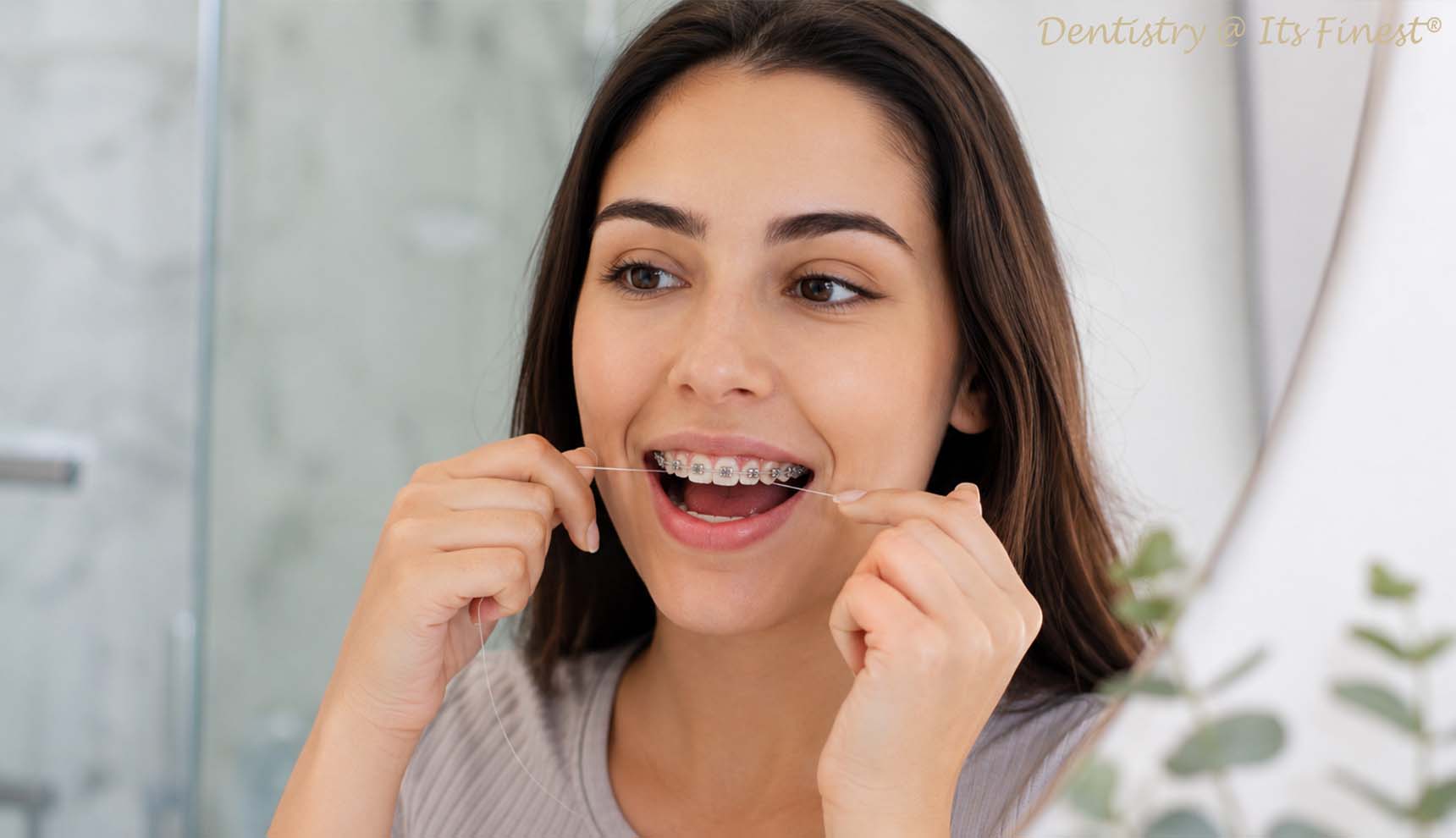
Most patients with braces stop flossing within the first month. Not because they don’t care, but because nobody actually showed them how to do it with a wire in the way, and figuring it out alone at 10 pm is frustrating enough that it just stops happening. The problem is that the consequences show up later, when the braces come off, and the enamel damage is already done. For many patients, metal braces remain a time tested way to straighten severely misaligned teeth, but maintaining proper hygiene during treatment is critical to protecting the final result.
Dentistry At Its Finest addresses this at every braces appointment in Costa Mesa, CA, because the difference between patients who floss consistently and those who don’t is visible on the teeth at the end of treatment.
Why This Matters More During Treatment Than Before
Brackets and wires create new places for plaque to sit that didn’t exist before treatment. The wire across the front of the teeth blocks floss from dropping down between the contacts, the way it normally would. Most patients interpret this as the wire making flossing impossible and move on.
Research published in the American Journal of Orthodontics and Dentofacial Orthopedics found that patients with fixed orthodontic appliances show significantly higher rates of gingival inflammation than non-orthodontic patients, directly linked to increased plaque retention around brackets. That inflammation is the early stage of gum disease, and it’s happening because the spaces between the teeth aren’t getting cleaned.
White spot lesions are the other issue. These are permanent chalky marks that appear on the enamel around bracket margins when bacterial acids have been sitting against the tooth surface long enough to demineralize it. They don’t go away when the braces come off. Patients who finish two years of orthodontic treatment with straight teeth and white spot lesions on every incisor are understandably upset, and most of it was preventable with consistent interproximal cleaning.
The Tools That Actually Work
Standard floss works fine mechanically. The problem is getting it under the wire. There are a few ways to do that, and the right choice is whichever one you’ll actually do every day.
Floss threaders are small plastic needles with a loop at one end. You thread regular floss through the loop and use the stiff tip to guide it under the archwire. Pull enough through to work with and you’re flossing normally from there. The technique adds about 30 seconds per contact once you’ve done it a few times. It’s slower than regular flossing, but it’s the most thorough option.
Superfloss solves the threading problem by building it into the product. One end is stiff enough to pass under the wire without a separate threader. The middle section is spongy and picks up debris around the bracket base. The other end is regular floss for the contact itself. Most patients find it faster than threading, and it handles the bracket area better than string floss alone.
Water flossers are worth taking seriously, especially for patients who find string flossing with braces genuinely unmanageable to maintain every day. A water flosser doesn’t clean the actual contact between two teeth as thoroughly as string floss, but it removes a significant amount of bacteria and debris from around brackets and under the wire, and doing it every day beats doing string flossing twice a week out of guilt.
“I’d rather a patient use a water flosser every single day than string floss twice a week when they remember. Consistency is the variable that matters. The goal is that plaque isn’t sitting in those contacts and around those brackets for 24 hours straight. The tool is secondary to whether it’s actually happening.” Sona Bekmezian
Interproximal brushes, the tiny brush heads on wire handles that fit between the archwire and the tooth, are useful for cleaning the bracket base and the tooth surfaces immediately adjacent to each bracket. They’re not a substitute for getting into the actual contact between teeth, but they address surfaces that string floss doesn’t reach well.
The Actual Technique
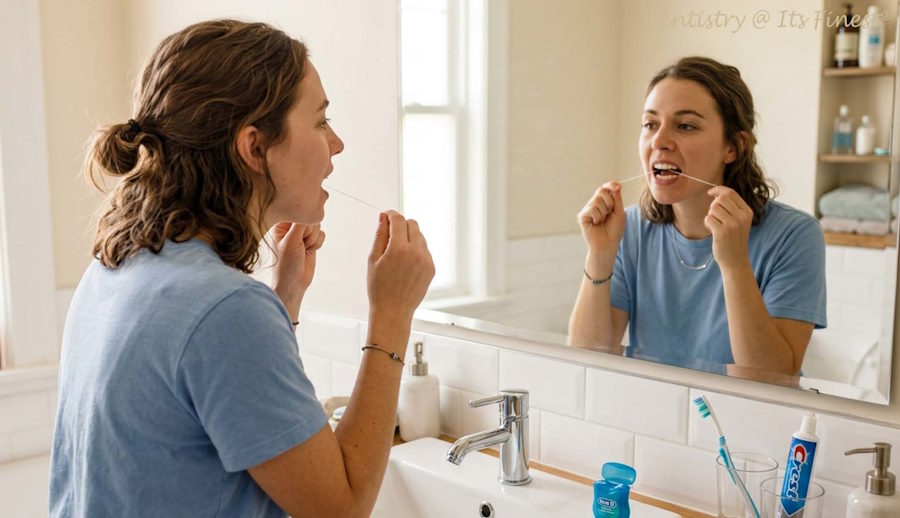
With a floss threader: cut about 18 inches of floss, thread 6 inches through the loop, and use the stiff end to guide it under the archwire between two brackets. Once the floss is through, curve it into a C-shape against one tooth, slide it gently under the gumline, and move it up and down against the tooth surface. Repeat on the adjacent tooth. Then pull the floss out to the side, not upward through the wire.
Pulling the floss upward rather than out sideways is the mistake that displaces ligatures and catches on brackets. Every time you exit a contact, go sideways. Rethread for the next space and repeat across the full arch.
With superfloss, the threading step is eliminated because the stiff end does it. The C-shape technique against each tooth surface is identical.
The full sequence takes 10 to 15 minutes while you’re learning, and closer to 5 to 7 minutes once it’s familiar. Evening is the better time for it, before brushing, so any debris that gets loosened gets cleared immediately afterward.
How Often
Every day. Once is enough if it’s thorough, but it needs to happen daily because overnight is when bacteria accumulate most significantly without the mechanical disruption of eating and drinking. Morning flossing is better than skipping, but night is better than morning.
| Tool | What It Does Well | Where It Falls Short |
| Floss threader with regular floss | Thorough contact cleaning | Slow, requires consistent technique |
| Superfloss | Threading and contact cleaning combined | Can struggle in very tight contacts |
| Water flosser | Bracket and wire cleaning, daily consistency | Doesn’t fully replace contact cleaning |
| Interproximal brush | Bracket base and adjacent surfaces | Doesn’t reach deep contacts |
A week of skipping floss during orthodontic treatment isn’t the same as a week without braces. The brackets accelerate plaque retention, and the inflammatory response in the gum tissue compounds quickly. Gums that are chronically inflamed throughout treatment often don’t return fully to baseline once the appliances are removed.
Getting the Technique Right
Sona Bekmezian and the team at Dentistry At Its Finest review flossing technique with braces patients at appointments because it’s one of the highest-impact things a patient can do to protect their teeth during treatment. Call (949) 239-0020 with questions about your current routine or to get started with treatment.
Dentistry At Its Finest welcomes braces patients from nearby neighborhoods including Halecrest, Westside Costa Mesa, and Irvine who are looking for expert orthodontic care and guidance from Dr. Sona Bekmezian. If you have questions about flossing with braces or want to get your orthodontic hygiene on track, we’re here to help. Call us today at (949) 239-0020 to schedule your appointment.
