
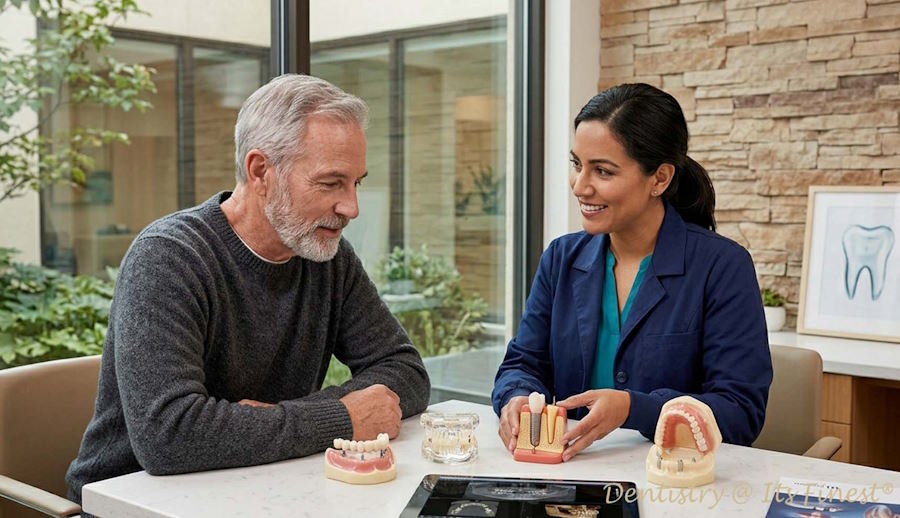
If you’re thinking about implants and trying to figure out what that first appointment actually involves, you’re not alone. Most patients come in having done a fair amount of research but still not knowing what to expect when they sit down in the chair. This article walks through the actual clinical process so you know what’s happening and why. Replacing missing teeth with implants often starts with a detailed consultation and diagnostic evaluation.
At Dentistry At Its Finest, we treat the consultation as a diagnostic appointment, not a meet-and-greet. Patients coming to us in Costa Mesa from the surrounding Orange County area usually want a straight answer: can I get implants, and what does the process look like for me specifically? Getting to that answer takes a real workup.
What Your Dentist Examines First
Before anything else, we’re looking at the current state of your mouth. That includes the condition of any remaining teeth, the health of your gum tissue, and whether there’s any active periodontal disease or infection present. This matters more than people realize. Placing an implant into a site with unresolved bacterial infection is a reliable way to lose the implant. So if there’s disease present, that gets addressed first.
Bone volume at the implant site is the other immediate concern. Implants are titanium fixtures that fuse directly to the alveolar bone through a process called osseointegration. That process only works if there’s enough bone to anchor the implant securely. Tooth loss typically triggers bone resorption fairly quickly, sometimes within weeks of an extraction, so the longer a site has been empty, the more likely it is that bone volume has decreased.
Imaging and X-Rays Explained
A proper implant consultation needs more than a basic X-ray. The standard of care for implant planning now includes cone beam computed tomography, a CBCT scan, which produces a three-dimensional image of the jaw. That image shows bone height, width, and density at the specific site, and it shows the exact location of structures you absolutely cannot hit during surgery, like the inferior alveolar nerve running through the lower jaw or the floor of the maxillary sinuses above the upper teeth.
A panoramic radiograph gives you a useful overview and we use those too, but a 2D image doesn’t give you the depth information you need to place an implant safely and accurately. A study published in the Journal of Oral Implantology found that preoperative CBCT imaging meaningfully reduces intraoperative complications and improves placement accuracy compared to conventional radiography. Any consultation that skips this step is cutting corners.
Medical History Review
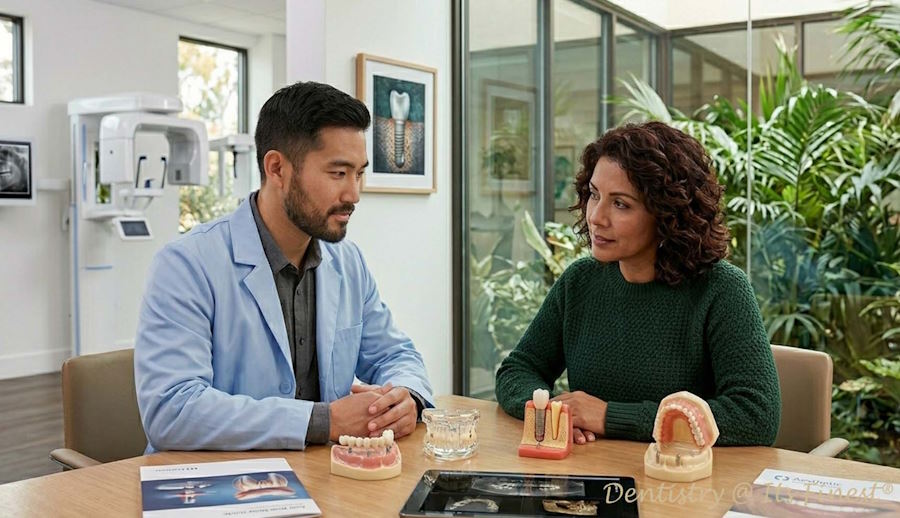
This section of the appointment carries more weight than most patients expect. Your medical history isn’t just background information. It directly affects whether surgery is appropriate and how the healing process will go.
A few things we pay close attention to: uncontrolled type 2 diabetes slows healing and impairs osseointegration. Bisphosphonate medications, prescribed for osteoporosis, carry a risk of osteonecrosis of the jaw when combined with oral surgery. Autoimmune conditions, anticoagulant therapy, and certain cardiac medications all factor into the surgical approach and timing.
Smoking gets its own conversation. Research published in Clinical Oral Implants Research found implant failure rates in smokers running more than double those in non-smokers in some study populations. That’s not a minor consideration. It changes the risk profile of the whole procedure.
“The medical history tells me whether we can proceed as planned or whether we need to slow down and coordinate with the patient’s physician first. It’s where I find things that would otherwise become complications.” – Michael Ayzin DDS
What You Walk Away With After the Visit
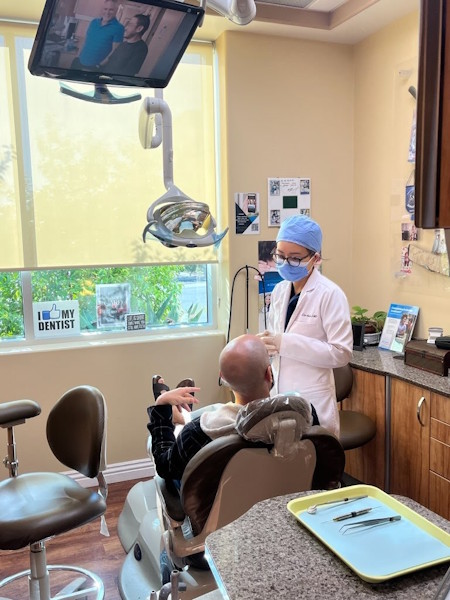
By the end of a thorough consultation, you should have a specific treatment plan, not a brochure. That means knowing whether you need extractions, bone grafting, or periodontal treatment before implant placement can even happen. It means understanding what type of implant and prosthetic restoration fits your case. It means a realistic timeline, not a vague range of “several months.”
You should also have a cost breakdown. Implant treatment involves multiple appointments and often multiple providers, and the financial picture needs to be clear upfront so there are no surprises.
One thing that catches patients off guard: sometimes the consultation reveals that implants aren’t the immediate next step. Active gum disease needs treatment first. Insufficient bone needs to be grafted and allowed to heal. That’s not bad news. It’s the honest sequence of events that gives the final implant the best shot at lasting 20 or 30 years rather than failing in year three.
The consultation is where the real planning happens. Patients who come through that appointment with a clear diagnosis and a specific treatment sequence have a very different experience than those who were handed a number over the phone and told to come back for surgery.
Getting Started in Costa Mesa
If you’re considering implants and want a consultation that actually tells you something, we’re accepting new patients. Dentistry At Its Finest sees patients from Newport Beach, Irvine, Huntington Beach, and across the Costa Mesa area. Call (949) 239-0020 or visit Dentistry At Its Finest to schedule.
Dentistry At Its Finest welcomes patients considering dental implants from neighborhoods including Mesa Del Mar, Halecrest, and College Park. If you’re ready to find out whether implants are right for you, our team is here to walk you through every step with a thorough, no-guesswork consultation. Call us today at (949) 239-0020 to schedule your appointment with Dr. Michael Ayzin.
