
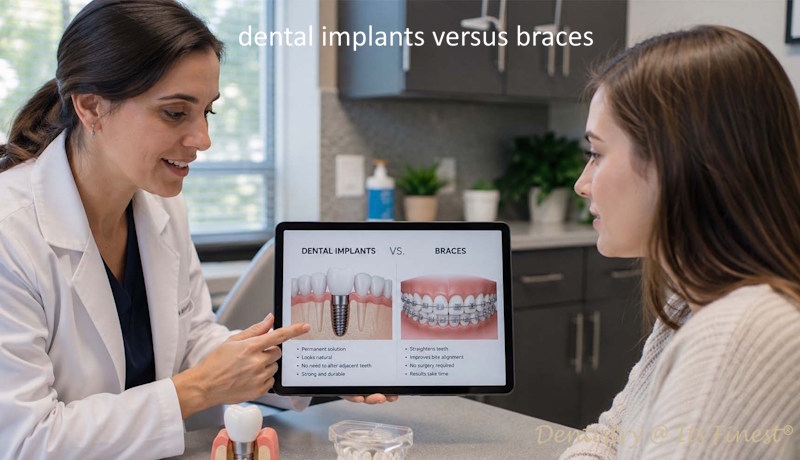
A lot of patients are surprised when they learn that getting braces in Costa Mesa and Dental implants placement is not simply a matter of choosing which procedure they want first. The order actually plays a major role in how successful the final result will be.
Dental implants placement is often influenced by how the teeth and jaw need to move during braces treatment. Someone may come in expecting to replace a missing tooth, only to find out they also need orthodontic treatment beforehand. Others start looking into braces and later discover that an implant will eventually be part of the plan, too. Once both treatments are involved, timing becomes important.
Patients throughout Costa Mesa often ask about this at Dentistry At Its Finest, especially after learning that implants and natural teeth behave very differently inside the mouth. Understanding that difference makes the reasoning behind treatment sequencing much easier to follow. A short consultation can also walk you through what treatment planning involves once a sequence is set.
Why Treatment Order Makes Such a Big Difference
Dental implants are designed to stay fixed in place. After the titanium post fuses with the jawbone through a process known as osseointegration, it no longer moves like a natural tooth.
Natural teeth are different. Orthodontic treatment works because teeth respond to gentle pressure over time. Whether someone is wearing braces or clear aligners like Invisalign, the teeth gradually shift into better positions.
This becomes important when both implants and orthodontics are needed.
If an implant is placed before orthodontic treatment begins, the surrounding natural teeth may continue moving while the implant remains stationary. Over time, the bite can change, and the implant crown may no longer align properly with the neighboring teeth. In some situations, correcting the problem can require replacing the crown or even removing and repositioning the implant altogether.
That is why treatment planning matters from the beginning.
Why Braces Usually Come First
When a tooth has been missing for a long time, nearby teeth often begin drifting into the space. They may lean, rotate, or partially close the gap. This creates problems when it is finally time to place an implant.
Orthodontic treatment helps correct those issues before surgery. Braces or aligners can reopen the space, straighten neighboring teeth, and create the proper dimensions for the future implant. This helps the final restoration look more natural and function correctly with the bite.
For example, if a patient is missing an upper lateral incisor, the orthodontist may need to recreate enough space for the replacement tooth to match the tooth on the opposite side. Without that preparation, the final implant crown can appear too narrow, too wide, or uneven compared to the surrounding teeth. If spacing is part of what’s driving this decision, it helps to understand how spacing gets treated before choosing an order.
Another benefit of finishing orthodontic treatment first is that it creates a more stable foundation for the implant. Once your teeth are properly aligned and you’re wearing retainers, the implant surgeon can place the implant more accurately. It also gives the restorative dentist a better idea of how the final crown should look and fit, helping create a more natural and comfortable result.
According to the American Academy of Implant Dentistry, more than 3 million Americans currently have dental implants, and roughly 500,000 additional implants are placed every year. Many of those patients either previously had orthodontic treatment or required it as part of their implant planning. This is a common situation, not a rare one.
Situations Where Implants May Come First
Although braces usually happen before implants, there are exceptions.
One example involves temporary anchorage devices, commonly called TADs. These small titanium screws are sometimes placed during orthodontic treatment to give the orthodontist a stable anchor point for specific tooth movements. They are temporary and serve a different purpose than a permanent dental implant, but they do represent a case where a titanium fixture is placed before orthodontic treatment is complete.
There are also cases where orthodontic treatment may not be necessary at all. If someone is missing a single molar, but the surrounding teeth are already well aligned and the bite is stable, the implant can often be placed without braces or aligners.
What Costa Mesa Dentists Typically Recommend?
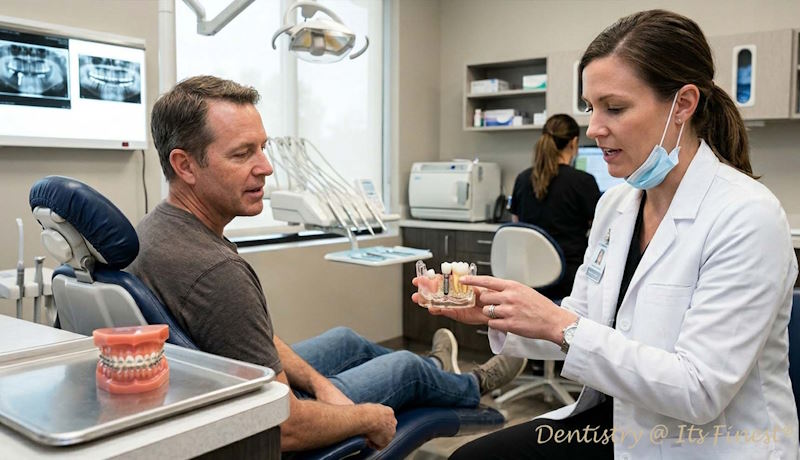
Michael Ayzin DDS explains the process this way:
“You want the teeth in their ideal positions before placing something permanent. Since implants do not move like natural teeth, it makes sense to complete the orthodontic work first in most cases.”
Research published in the Journal of Clinical Orthodontics has also shown that patients who complete orthodontic treatment before implant placement tend to achieve more predictable long-term esthetic and functional results.
For most patients who need both procedures, the treatment process generally follows this sequence:
- Comprehensive evaluation and treatment planning
- Orthodontic treatment with braces or clear aligners
- Retention phase to stabilize tooth positions
- Bone grafting if additional bone support is needed
- Dental implant placement
- Final crown restoration
Patients from Costa Mesa, Newport Beach, Huntington Beach, and Irvine are often surprised to learn how closely orthodontic and implant planning work together. The best results usually happen when both treatments are coordinated from the start instead of being approached separately.
If you are looking for dentist near me for missing teeth and alignment both concerns, it is important to understand how one treatment may affect the other before beginning either process. At Dentistry At Its Finest, patients receive guidance on how to sequence treatment properly so the final outcome looks natural, feels comfortable, and lasts long term. Call (949) 239-0020 to schedule a consultation and discuss the best treatment plan for your smile.
