
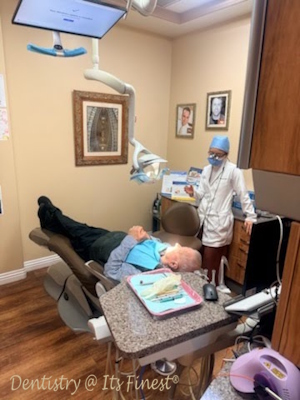
The anesthesia question is usually the first thing patients want answered when wisdom teeth come up. Not the cost, not the recovery, not even how many teeth need to come out. People want to know what they’re going to feel, and whether they have any say in it. If you’re preparing to remove wisdom teeth, Dentistry At Its Finest in Costa Mesa explains the anesthesia options so you can decide with confidence. Understanding local, sedation, and general anesthesia helps you know what to expect and what choices are available.
You do. And the answer depends on more than just your preference.
At Dentistry At Its Finest in Costa Mesa, CA, we go through this conversation with patients pretty regularly. Some people come in already knowing they want to be completely out. Others are surprised to learn they don’t have to be. So let’s actually go through what each option involves, who it’s right for, and what the recovery looks like.
Who Typically Needs Anesthesia for Wisdom Teeth Removal?
Wisdom teeth removal is most common among teens and young adults, typically between the ages of 17 and 25, though some adults may need the procedure later in life. Patients with impacted wisdom teeth, dental anxiety, complex extractions, or multiple teeth being removed often discuss different anesthesia and sedation options to ensure a safe and comfortable experience.
The Three Main Anesthesia Options for Wisdom Teeth Removal
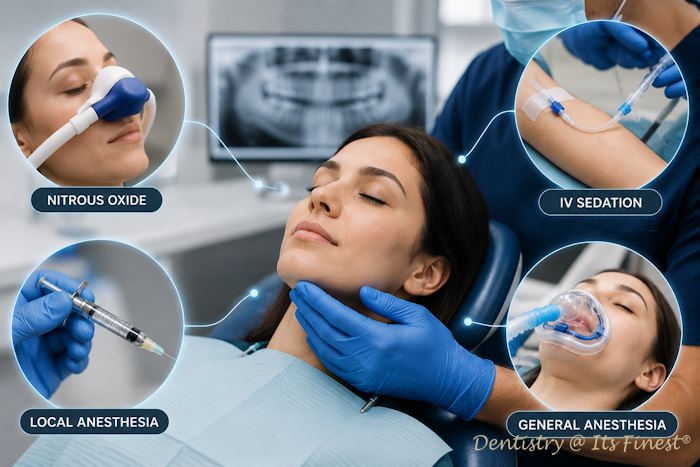
Local Anesthesia – Awake and Numb
Local anesthesia is exactly what it sounds like. An injectable agent, usually lidocaine or articaine, blocks the nerve signals in the specific area being worked on. You stay awake the whole time. You won’t feel pain, but you’ll feel pressure and movement, and you’ll be aware that something is happening in your mouth.
This works well for wisdom teeth that have fully erupted and aren’t buried deep in the jaw. The procedure is faster, the recovery is simpler, and you can drive yourself home. Most people are back to normal within a day or two.
The real limitation is that it doesn’t do anything for anxiety. If you’re already nervous about dental procedures, being awake while someone extracts a molar is not going to be a relaxing experience. For straightforward cases with a calm patient, local anesthesia is a perfectly reasonable choice. For everyone else, it’s usually not the first recommendation.
IV Sedation – What Most Patients Actually Receive
IV sedation is the most common option for wisdom tooth removal, and there’s a good reason for that. Sedative medications are delivered directly through an intravenous line, and within a few minutes you’re in a deeply relaxed state where you’re technically conscious but not really tracking what’s happening. Most patients have little to no memory of the procedure.
The medications used are typically midazolam, propofol, or fentanyl, sometimes a combination depending on what the patient needs. You won’t feel pain, you won’t feel anxious, and the whole thing usually feels like it lasted about two minutes even if it took an hour.
According to the American Association of Oral and Maxillofacial Surgeons, IV sedation is used in the majority of wisdom tooth procedures performed in the US each year. That’s not a coincidence. It hits the right balance for most impacted third molar cases — enough sedation to keep you comfortable and cooperative, without the longer recovery that comes with full general anesthesia.
You do need someone to drive you home and stay with you for a few hours. Expect to feel groggy and tired for the rest of that day. By the next morning most people are functional, though the extraction sites themselves take longer than that to fully heal.
General Anesthesia – When Complete Unconsciousness Is Needed
General anesthesia puts you completely under. You’re not aware of anything, you don’t respond to anything, and the whole procedure happens while your vital signs are continuously monitored by a trained anesthesiologist.
This is typically reserved for patients with severe dental phobia, complex surgical cases, patients with certain medical or behavioral conditions that make IV sedation less appropriate, or procedures happening in a hospital or ambulatory surgical center rather than a dental office.
Recovery takes longer than with IV sedation. Nausea afterward is more common. You’ll need someone with you for the full day and potentially the following day depending on how you respond. It’s not inherently more dangerous when done properly, but it does carry more variables than the alternatives, which is why most oral surgeons use it when there’s a genuine clinical reason to, not as a default.
“In my experience, most patients who think they need general anesthesia do extremely well with IV sedation. The comfort level during the procedure is similar, the memory of it is similar, and the recovery is easier. We always have that conversation before making a plan.” — Michael Ayzin DDS
How Do You Choose the Right Anesthesia Type?
Your oral surgeon will guide this decision, but knowing what factors matter helps you show up to the consultation with better questions.
Complexity of the extraction is probably the biggest driver. A horizontally impacted lower wisdom tooth buried in the jawbone takes significantly more surgical time than a fully erupted upper tooth. More complex cases benefit from deeper sedation, both for patient comfort and to give the surgeon the conditions they need to work carefully.
Anxiety is a legitimate clinical factor, not something to downplay. If being awake during a procedure genuinely distresses you, that’s information your provider needs. Trying to push through it doesn’t help anyone.
Medical history shapes what’s safe. Certain medications, respiratory conditions, and metabolic factors affect which sedation agents can be used and at what doses. This is why a thorough health screening happens before any wisdom tooth surgery.
| Anesthesia Type | Consciousness Level | Best For | Needs a Driver |
|---|---|---|---|
| Local anesthesia | Fully awake | Simple erupted teeth, low anxiety | No |
| IV sedation | Relaxed, minimal awareness | Most impacted extractions | Yes |
| General anesthesia | Fully unconscious | Complex cases, severe phobia | Yes |
How Much Does Anesthesia Add to the Total Cost?
Local anesthesia is usually folded into the base extraction fee. IV sedation carries a separate charge, typically somewhere in the $300 to $600 range per hour, though this varies by provider and location. General anesthesia costs more, especially when a hospital or surgical center is involved, because facility fees apply on top of the anesthesia provider’s time.
Insurance coverage for sedation is inconsistent. Some plans cover IV sedation for impacted wisdom tooth removal because it’s considered medically necessary. Others treat it as elective regardless of the clinical situation. It’s worth a direct call to your insurance company before your procedure date, with the specific treatment codes from your dentist’s office, so you know what you’re actually looking at out of pocket.
For most patients weighing cost against comfort, IV sedation at an oral surgery practice tends to make the most sense. It’s significantly less expensive than hospital-based general anesthesia, the recovery is faster, and the procedure experience is genuinely comfortable for the vast majority of people. It’s worth getting ballpark removal pricing before your consultation so anesthesia fees don’t catch you off guard. Patients with dental anxiety should also have sedation basics explained ahead of time.
What to Expect During and After Each Anesthesia Type
What Happens During the Procedure
With local anesthesia, the injection itself is usually the sharpest part. After that, you feel pressure and movement but not pain. You’re aware of time passing, which some people find manageable and others find very uncomfortable.
With IV sedation, most patients describe the experience as going from the moment the IV starts to suddenly being in the recovery area with no memory of anything in between.
With general anesthesia, the same thing applies — you simply aren’t present for any of it.
What Recovery Looks Like Afterward
Swelling, soreness, and some bleeding in the first 24 to 48 hours are normal regardless of which anesthesia type you had. The extraction sites take about seven to ten days to close over, sometimes a bit longer for lower impacted teeth.
The sedation itself is what differs most in recovery. Local anesthesia patients feel normal almost immediately after the numbness fades. IV sedation patients need the rest of the day. General anesthesia patients usually need the longest window to clear the medication and are most prone to post-operative nausea.
One complication worth knowing about is dry socket, also called alveolar osteitis, which occurs when the blood clot at the extraction site breaks down before healing completes. It affects roughly 2 to 5 percent of routine extractions and up to 30 percent of impacted lower wisdom tooth cases. The type of anesthesia doesn’t influence this. Following post-operative care instructions does.
What Patients Are Saying
“I went in for the removal of my wisdom teeth and was quite nervous. It was an absolute breeze. The doctor and assistant took care of me and made me feel at ease. I definitely recommend and will be a client for life! Thank you!”
— Mike R
“I’ve always been scared of getting my wisdom teeth removed but Dr. Ayzin and the office team definitely did everything to have me feel relaxed and comfortable which I appreciated very much. The procedure was fast and easy. I was in and out. Will definitely be coming back for any other future work!”
— Leanna Arteaga
“Just got my 3 wisdom teeth removed by doctor Ayzin. It was a painless and stressless experience. Super professional. Highly recommend.”
— Kostiantyn Diachenko
Still Have Questions Before You Book?
If you’ve been putting off wisdom tooth removal because you weren’t sure what the anesthesia situation would look like, now you have a clearer picture. The right option comes down to your specific case, your medical history, and an honest conversation about what you’re comfortable with. Dentistry At Its Finest works with patients from Westside Costa Mesa, College Park, and Mesa Del Mar. Call (949) 239-0020 to set up a consultation and we’ll walk through your options before anything gets scheduled.
Ways on How to Relieve Pain After Wisdom Teeth Removal | Should You Choose Invisalign or Braces to Close Gaps Between Teeth?
