
Short answer: porcelain veneers don’t really stain. Composite veneers do. That distinction matters more than most people realize, and if you’re researching veneers or already have them, it’s probably the most useful thing you can take away from this article.
At Dentistry At Its Finest, we offer advanced porcelain veneer services to help patients achieve and maintain a radiant, confident smile. If you are in Costa Mesa, following the right care routine after cosmetic dentistry can keep your results looking bright and beautiful for years to come.
Dentistry At Its Finest in Costa Mesa, CA gets this question constantly, usually from two types of patients: people who are considering veneers and want to know if they’ll have to give up coffee, and people who already have veneers and think something has gone wrong with the color. Both groups deserve a clear answer, so here it is.
Why Patients Worry About Veneer Staining and Whether That Worry Is Justified
The concern makes complete sense. Natural tooth enamel is porous, which is why teeth absorb pigment from red wine, coffee, and tea over time. So the assumption, when you’re about to bond a thin shell of material to your teeth, is that the same process will happen to the veneer. For porcelain, that assumption is wrong. For composite resin, it’s mostly right.
Porcelain is a glass-ceramic material with a dense, smooth surface. It doesn’t absorb chromogens the way enamel does. A 2018 review in the Journal of Prosthetic Dentistry found that feldspathic and pressable ceramic veneers show significantly lower staining susceptibility over time compared to both natural enamel and composite resin alternatives. That tracks with what we see clinically. Patients who’ve had porcelain veneers for ten or twelve years and maintained them decently almost always still have the same shade they started with.
What does happen is that veneers sometimes appear to change color, and patients assume they’ve stained. Usually something else is causing it. More on that below.
How Different Veneer Materials Respond to Staining Differently
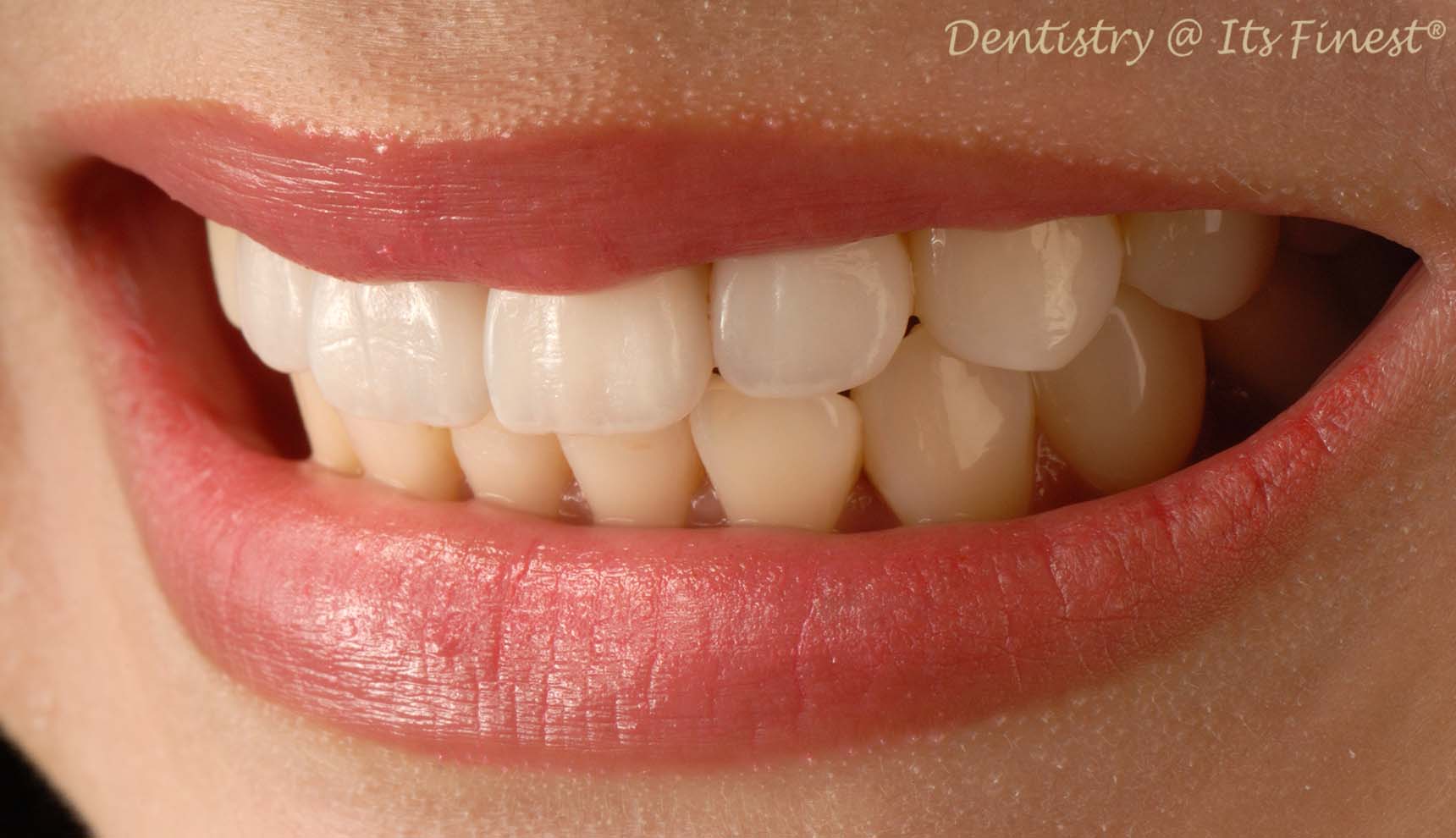
Porcelain holds its color because of the glazed outer surface. That glaze gives porcelain its translucency and its resistance to pigment absorption. The things that can actually degrade it aren’t foods that stain — they’re abrasives and acids. Whitening toothpastes that contain silica or baking soda, hard-bristle brushes, and regular exposure to acidic drinks like soda or kombucha can micro-roughen the surface over years of use. The veneer still won’t absorb stain the way enamel does, but a scratched surface holds deposits differently than a pristine one.
Composite resin is a different material with different behavior. It’s porous. It absorbs pigments from coffee, tea, red wine, and berries in a way that porcelain simply doesn’t. Patients with composite veneers who drink coffee daily will often notice color shifts within a year or two. That’s not a failure of the dentist or the procedure, it’s just the material doing what the material does. Composite is generally a shorter-term solution — five to seven years before refinishing or replacement is realistic — while well-maintained porcelain routinely lasts fifteen years or more.
Two other things get mistaken for veneer staining and are worth knowing about. First, the bonding cement used to attach porcelain veneers can discolor at the margin over time, usually as a thin line near the gumline. It looks like the veneer is yellowing, but it’s just the cement. A regular cleaning typically polishes it off. Second, gum recession exposes natural tooth structure below the veneer edge. That exposed enamel stains like any other tooth surface and can create a noticeable contrast against the bright veneer above it. The veneer is doing its job perfectly. The issue is what’s now visible underneath it.
The Foods and Habits Most Likely to Affect Veneer Color Over Time
For porcelain, the traditional food-and-drink staining concern is largely a non-issue. The surface chemistry doesn’t allow for the kind of pigment absorption that happens in enamel.
Tobacco is the exception. Nicotine and tar can embed in any surface roughness on the glaze with prolonged exposure, and this is one of the few situations where porcelain veneers genuinely shift in color over time. It’s also one of the harder changes to reverse. Professional polishing helps, but it doesn’t always get back to the original appearance once tobacco staining has had years to accumulate.
Acidic foods and drinks don’t stain veneers directly, but they contribute to glaze degradation, and a degraded surface is more prone to holding deposits from other sources. Carbonated drinks, citrus juice, and vinegar-based foods are the main culprits.
Grinding is worth mentioning even though it’s not a staining issue. Bruxism wears veneer surfaces faster than almost any dietary habit. Worn porcelain loses its translucency and looks dull and flat. If you grind, a nightguard is genuinely the most cost-effective thing you can do to protect the longevity of your veneers. A replacement veneer costs significantly more than a custom guard.
“The veneer surface itself holds up remarkably well. What I see cause problems over time is usually not staining at all. It’s abrasive toothpastes, gum changes, or grinding that nobody mentioned during the original consultation. Those are the conversations I want to have before someone gets their veneers, not after.” — Michael Ayzin DDS
How to Keep Your Veneers Looking Their Brightest for as Long as Possible
Use a soft-bristle brush. This is probably the single most practical piece of advice for veneer maintenance, and it’s the one people most often ignore because they assume a firmer brush cleans better. It doesn’t, and on veneer surfaces, it actively causes harm over time.
Switch to a low-abrasion toothpaste. Many whitening toothpastes are too abrasive for daily use on porcelain. Gel formulas tend to be safer. If you want a specific recommendation, ask at your next appointment. It takes thirty seconds and it’s genuinely worth knowing.
Floss at the veneer margins every day. Plaque accumulation at those edges drives gum inflammation, and chronic inflammation causes recession, which creates the color contrast problem described earlier. Flossing isn’t glamorous but it directly protects the long-term appearance of your smile.
Keep up with professional cleanings. Every six months matters for veneer patients specifically — not just in general. Your hygienist can monitor the margins, catch early gum changes before they become visible problems, and polish off cement discoloration before it has time to settle in. What gets addressed at a routine appointment is a lot simpler to manage than what accumulates over two or three years of skipped visits. For deeper discoloration, in-office whitening results tend to outlast at-home kits. If whitening alone won’t get you there, there are other smile upgrades worth a look.
One thing that comes up regularly: people try whitening products on their veneers hoping to brighten them. It doesn’t work. The chemistry that lifts stains from enamel doesn’t penetrate ceramic. You’ll just risk surface damage on the veneer while seeing no color change at all. The only way to get a whiter porcelain veneer is to replace it with one made in a lighter shade. This is why choosing the right shade at the outset matters so much.
What Our Patients Are Saying
“Dr. Ayzin and his amazing right hand, Rebecca, went above and beyond my expectations for my cosmetic dentistry procedure (porcelain veneers). Not only was he incredibly thoughtful about aligning the work to my expectations and comforts, but the entire team treated me so well, and the results were exactly what I had hoped for and more. The team made every appointment comfortable and calm — really grateful to Dr. Ayzin and all of the dental support staff for their hard work. I would highly recommend to anyone looking for cosmetic or non-cosmetic dentistry!”
— Allison Kerzner
“I’ve been a long time customer of Dentistry At Its Finest and for good reason! Time and time again they deliver top quality service and products. A lot of people don’t like the dentist but really what they don’t like is feeling uncomfortable in the chair. The staff at Dentistry At Its Finest made me feel comfortable and confident. Beyond normal cleanings, I’ve received veneers, implants, and Invisalign. There’s really nowhere else I would go!”
— Jordan Gaarenstroom
Patients from Irvine, Fountain Valley, and Huntington Beach come to Dentistry At Its Finest for veneer consultations and ongoing care. If you have questions about your existing veneers or you’re thinking about getting them, call (949) 239-0020.
How are veneers put on Teeth? | How To Keep Invisalign Trays From Smelling Bad
