
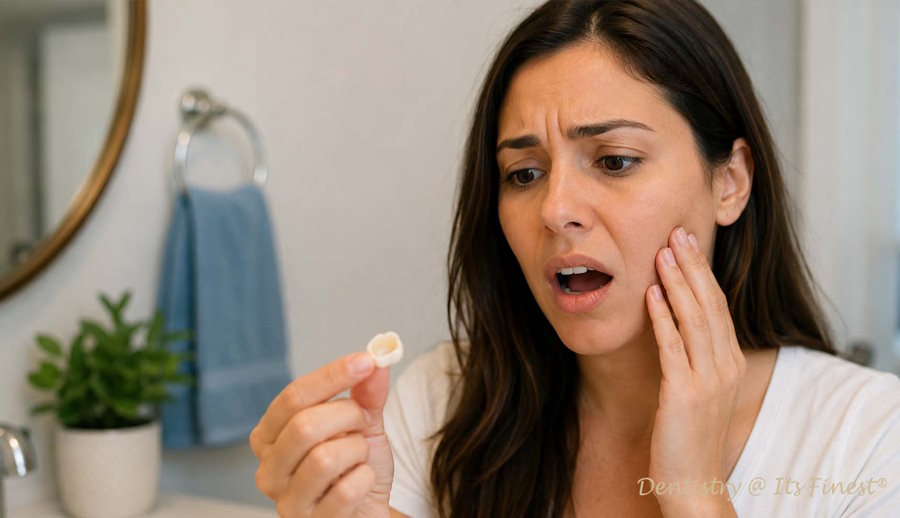
Crown’s off. You felt it go while eating, or you woke up, and it was just gone, or it’s sitting in your hand right now, and you’re not sure what to do with it. Here’s what to do before you can get to a dentist.
At Dentistry At Its Finest, we understand how stressful it can be to deal with a lost or damaged crown. If you need guidance or prompt care for a dental crown in Costa Mesa, our team is here to help protect your tooth and restore your smile quickly and comfortably.
If your crown falls off suddenly and you’re dealing with pain, sensitivity, or a fully exposed tooth, seeing an Emergency dentist as soon as possible can help prevent further damage and reduce the risk of infection.
Find the Crown and Don’t Damage It
The crown needs to be located and kept safe. Whether it’s a full zirconia crown, a porcelain-fused-to-metal crown, an all-ceramic restoration, or an older gold alloy crown, your dentist needs to examine it before deciding whether recementation is possible or whether a new one is needed.
Rinse it gently with warm water. That’s it. Don’t scrub it, don’t use toothpaste, don’t use any cleaning agents. The internal surface of the crown, the part that fits over the tooth preparation, has a specific geometry and surface texture that affects how well it sits. Anything abrasive or chemical on that surface complicates recementation.
Store it in a small container or zip-lock bag. Don’t wrap it in tissue because fibers get into the internal surface and cause problems. Bring it to the appointment regardless of how it looks. Even a crown that appears damaged tells your dentist useful information.
Look at the Tooth Underneath
The tooth beneath a crown is a prepared tooth, shaped and reduced to accommodate the restoration. Without the crown acting as a structural shell, that prepared tooth structure is considerably more vulnerable than an intact natural tooth. Less enamel, exposed dentin, and reduced structural integrity under biting load.
Examine both the crown and the tooth. If the crown came off cleanly and the tooth underneath looks intact, no dark areas, no pieces of tooth stuck inside the crown, no obvious fracture, that’s a favorable sign. It likely means the luting cement failed rather than something structural happening with the tooth. Recementation at a single appointment is often what follows in that scenario.
If there’s tooth structure stuck inside the crown when you look at it, that’s a different situation. Pieces of the abutment coming away with the crown indicate either fracture of the prepared tooth or significant decay that undermined the bond. That needs a same-day evaluation.
Temperature sensitivity in the exposed tooth is expected. Dentin is now exposed to air and temperature without protection. That’s uncomfortable, but not automatically a sign that something is wrong with the tooth itself. Spontaneous pain that starts without any trigger is the signal that warrants urgency.
Protect the Tooth Until You’re Seen
Don’t chew on that side. At all. The prepared tooth has reduced structural integrity, and fracturing it under biting load changes the treatment from a recementation appointment to something considerably more involved.
Temporary crown cement is available at most pharmacies. Recapit, Dentemp, and similar products contain a temporary luting agent that can hold the crown in place for a short period. Dry both the crown and the tooth as best you can, apply a small amount to the internal surface of the crown, seat it carefully over the tooth, and bite down gently to help it seat fully. It’s not permanent. It’s not meant to be. The goal is to protect the prepared tooth and reduce sensitivity until you’re seen professionally.
If the crown isn’t available or can’t be reseated, dental wax or sugar-free chewing gum pressed over the tooth provides minimal but meaningful protection from air and temperature.
A study published in the Journal of Prosthetic Dentistry identified crown decementation, failure of the luting cement bonding a crown to the underlying tooth preparation, as one of the most frequent complications in fixed prosthodontics. In many of those cases, the crown is intact, and recementation is the entire treatment. What complicates that picture is decay on the exposed preparation, a fractured abutment, or a crown that’s been lost.
“When a crown comes off, three things matter. Keep the crown safe. Don’t chew on the exposed tooth. Call the same day. In a lot of cases, we can recement it in one appointment. What makes that impossible is a crown that’s been lost, a tooth that’s been used without the crown and cracked, or a patient who waited two weeks and now has decay on the preparation.” – Michael Ayzin DDS
Call and Tell Them What’s Happening
Call the same day. Crown decementation is exactly the situation most dental offices keep urgent appointment slots available for. It needs timely attention, and the fix, when conditions are right, is often quick.
When you call, be ready to describe which tooth, upper or lower, front or back. Whether you have the crown and whether it looks intact. Whether there’s pain and what kind. Whether you can see any dark areas or tooth fragments inside the crown. That information helps the office figure out whether you need to come in within the hour or whether the next morning is acceptable.
A rough guide to urgency:
Crown off, tooth comfortable, crown intact: next 24 to 48 hours are usually fine. Mild temperature sensitivity, crown temporarily reseated: one to two days. Moderate pain, can’t reseat crown: same day. Tooth fragments visible inside the crown: same day. Spontaneous pain without any trigger: same day, urgent. The crown is lost, and the tooth is fully exposed: same day.
Once the tooth is protected temporarily, ask about the cost of a replacement crown at your follow-up visit. Watch for sensitivity that won’t quit in the meantime, since that can signal a bigger issue.

What Happens When You Come In
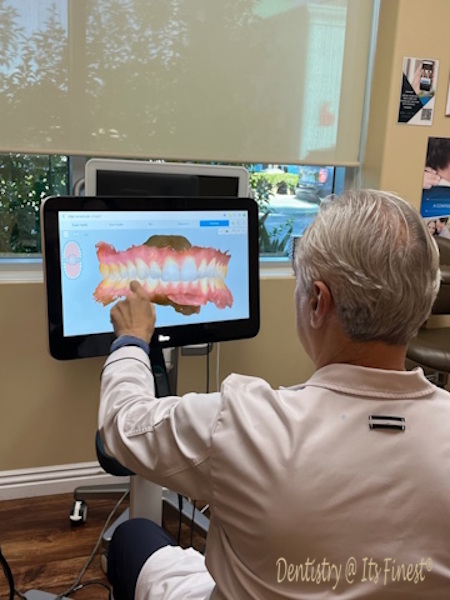
Your dentist will examine the crown and the tooth, take a radiograph to check the underlying tooth structure and root, and determine whether recementation is appropriate or a new crown is needed.
Recementation works when the crown is structurally intact, the margins fit correctly against the tooth preparation, and there’s no decay or significant fracture underneath. The old cement is cleaned from the internal surface, the preparation is conditioned, and a new luting cement, typically resin-modified glass ionomer or resin cement, depending on the crown type, bonds it back in place.
“On a Friday afternoon, I made a call to Dentristy At Its Finest after a crown came off. The wonderful, friendly staff at the front desk got me onto the schedule that afternoon, and Dr. Ayzin worked his magic quickly and painlessly.” – Judy Krikorian
“My crown came loose during my travel to Costa Mesa for work. Thankfully, I was able to get an emergency appointment with this dental office. They were very thorough and took the time to explain everything to me. The treatment was done in no time.” – Weverton Silva
A new crown becomes necessary when the existing one is fractured, when the marginal fit has been compromised, when there’s significant decay on the tooth underneath, or when the preparation itself has fractured in a way that changes its geometry.
Call (949) 239-0020 or visit Dentistry At Its Finest to reach Michael Ayzin DDS.
What Are the 10 Most Common Problems With Dental Crowns? | Dental Crown Warning Sign That You Should Not Ignore
